Plant proteins
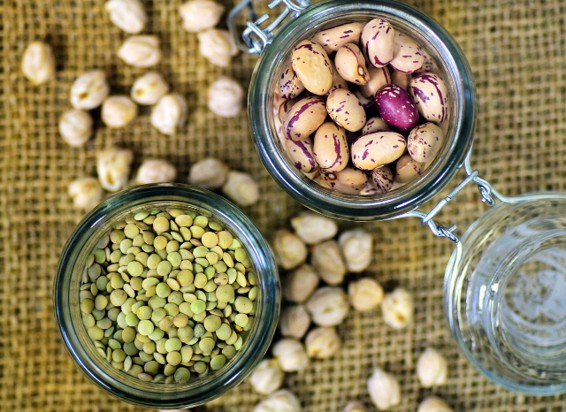
Plant proteins pose two major problems for their incorporation into food processes: functionality and particular aftertastes. The case of beany taste has already been discussed in another Science 2 Food article.
The main problem with plant proteins is their low native functionality. They are large protein molecules often associated with fibers that make them less soluble. A soybean globulin is a trimer (3 structural levels) of 50 kDa, whereas by comparison, a Beta Lactoglobulin (whey) is a simple monomer of 20 KDa.
The functionalities of proteins are often classified into 3 categories
- Protein-water interactions: protein rehydration and solubility capacity, impact on viscosity and water retention capacity
- Protein-protein interactions: ability to create a gel, a texture
- Surface property: emulsification functionality for protein-fat interaction or proliferation for protein-gas interaction.
But how can you improve the functionality of plant proteins?
The functional properties of proteins depend on their structure, their charge, and their hydrophobic properties. Therefore, modifying these characteristics can change their functional properties. Different strategies can be used:
By physico-chemical treatments: Different physico-chemical treatments can be used to modify the structure of proteins.
By hydrolysis: Proteases can be used to hydrolyze peptide bonds and reduce protein size. This size reduction generally improves the solubility and flexibility of polypeptides, which can lead to better functionality. Controlled enzymatic hydrolysis increases the solubility, emulsifying, and foaming properties of wheat gluten, soy, pea, rapeseed, amaranth, sunflower, or chickpea proteins.
By chemical modification: Proteins can be modified by:
Acylation, by blocking the amine group or hydroxyl group of the side chains by acyl residues;
Phosphorylation, by introducing acid groups into a protein;
Glycosylation, by attaching a sugar molecule to the protein;
Deamination, by heat treatment and use of extreme pH;
Esterification, by reacting carboxyl groups with alcohols or hydroxyl groups with carboxylic acids.
These chemical modifications are well described in the scientific literature but are rarely used at the industrial stage.
Of course, you can play with the choice of varieties and the cultivation aspects in agriculture, especially legumes. However, when you have ready-to-use protein ingredients, you can play with certain factors to improve functionality.
If we consider the case of protein solubility, it can be improved by adjusting the pH. Indeed, depending on the isoelectric point of the protein, solubility will differ.
Globulins (peas, soybeans, for example) have an isoelectric point at pH 4.6, while albumins (sunflower, rapeseed, for example) have a pH of 6.5.
So, to precipitate soy or pea proteins, you need to place them at pH 4.6, whereas to solubilize them, you need to place them at pH 7.2.
One can also play with the salinity of the medium, the ionic strength. A bell curve can be described showing the evolution of protein solubility as a function of the salt concentration of the medium. However, ionic strength is less decisive than the acidity of the medium in impacting solubility.
Note that for emulsion needs via proteins, the greater the solubility, the better the emulsifying properties.
We could discuss other features such as gelling (cold and hot) to create gels or thicken sauces, for example, stabilizing and emulsifying properties (foams and emulsions).
Science 2 Food has experience in this field, having already conducted training on the technological properties of plant proteins. Furthermore, during projects for industrial partners, we have been able to test solutions based on plant proteins to replace certain additives.